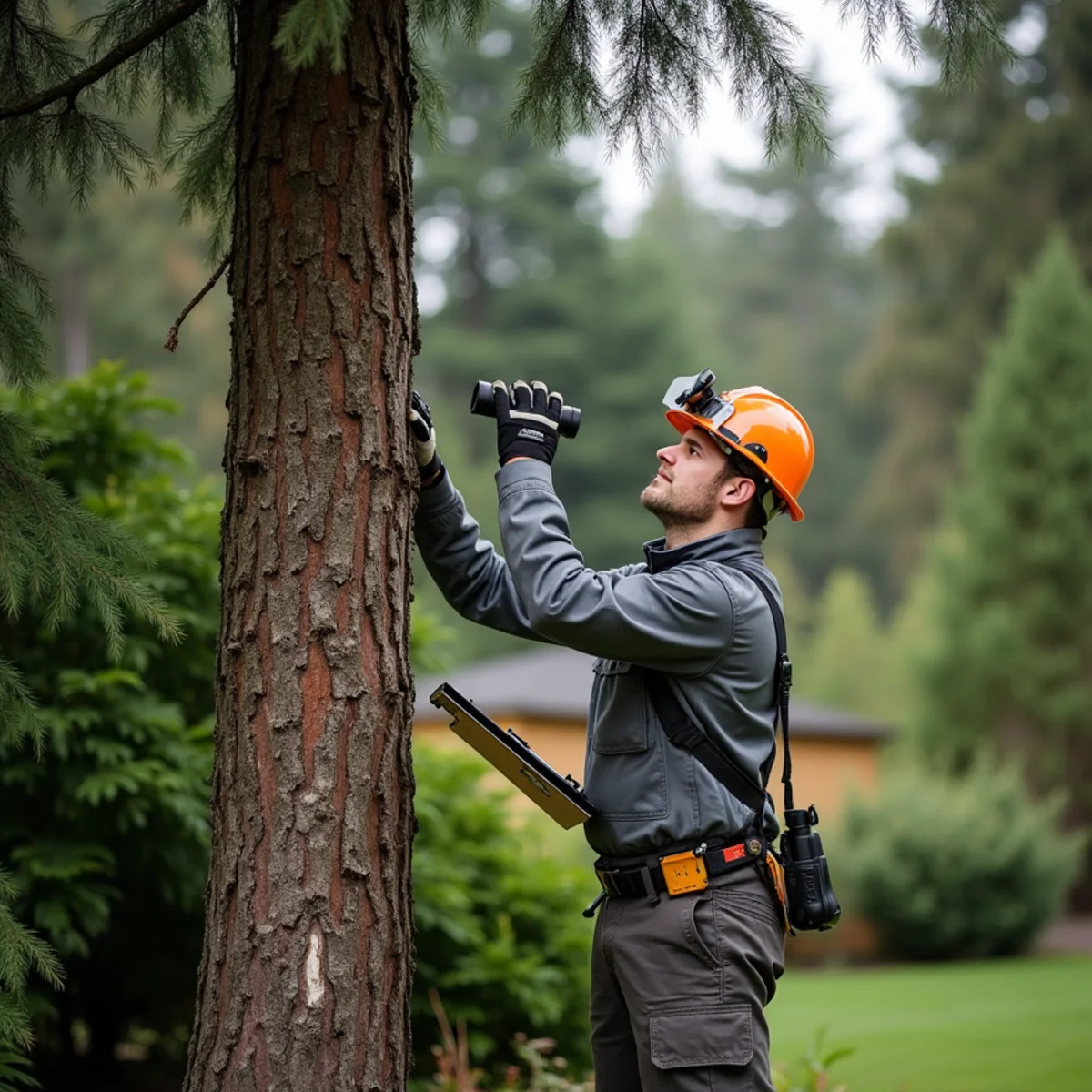
Most storm tree failures give warning signs months ahead. Here is how to inspect your mature conifers for weak branches and root rot before the gales arrive.
Every autumn, the Puget Sound's gale season sends conifers crashing onto homes, cars, and power lines. Here is what most homeowners do not realize: the majority of those failures were predictable. The tree showed warning signs, often for months, that a trained eye would have caught. A little inspection before the storms arrive is the single best way to prevent an emergency.
You do not need to be an arborist to spot the most common red flags. This guide walks you through what to look for on your mature Douglas firs, western hemlocks, and cedars, from the crown down to the roots.
Start With the Whole Tree
Step back and look at the tree as a whole first. A healthy conifer has a full, evenly balanced crown and stands upright. Some of the most telling warnings are visible from a distance before you examine any single part.
- A pronounced or new lean, especially if the soil is lifting on one side.
- A thinning crown or large sections with no needles.
- Dead tops or major dead limbs standing out against green.
- An asymmetric, lopsided crown that catches wind unevenly.
Inspecting the Branches
Weak and dead branches are the most common storm hazard because they fail before the whole tree does. Look up into the canopy and scan for trouble.
- 1Dead, bare branches with no needles, which are brittle and drop first.
- 2Broken or hanging limbs left from a previous storm.
- 3Branches with weak, tight V-shaped attachments that split easily.
- 4Large branches overhanging your roof, driveway, or play areas.
Trees rarely fail without warning. They just fail without anyone looking.
The Trunk Tells a Story
Move in and examine the trunk. The bark and wood reveal a lot about the tree's internal health. Look for vertical cracks or seams, cavities or hollow-sounding areas, and any spots where the bark is missing or the wood is soft and crumbling. Conks, which are shelf-like fungal growths on the trunk, are a serious sign of internal decay and warrant a professional look right away.
Root Rot: The Hidden Killer
Root rot is especially dangerous because it undermines the tree's anchor while the crown may still look green. In our wet soils, root diseases like laminated root rot and others are common in conifers, and a tree with compromised roots can topple entirely in a moderate wind. Because the damage is underground, you have to read the surface clues.
See Warning Signs? Get a Professional Assessment
Root rot and internal decay are difficult to judge from the ground, and the stakes are high. If you spot a lean, fungal growth, or lifting soil, call Florentino Landscaping at (323) 606-0255 for an assessment before the gales arrive.
Call (323) 606-0255Reading the Ground Around the Roots
The base of the tree and the soil around it hold important clues about root health. Get down and look carefully.
- Mushrooms or fungal growth at the base, a possible sign of root decay.
- Soil that is heaving, cracking, or lifting on one side of the trunk.
- A trunk that enters the ground straight like a telephone pole, lacking the natural root flare.
- Visible roots that are damaged, decayed, or cut from nearby work.
When to Act
Not every flaw means a tree must come down. Many hazards can be addressed by removing specific dead or overhanging limbs, and plenty of imperfect trees are perfectly safe to keep. But signs of root rot, a new lean, major internal decay, or large dead sections over a target warrant professional evaluation, and sometimes removal, before storm season. The point of inspecting now is to make that call on your schedule, not during a 2 a.m. windstorm.
Keeping a Tree Inventory
For properties with several mature conifers, keeping a simple written record of each tree pays off year after year. Note its location, its general condition, and any concerns you spotted, and date each inspection so you can track how things change over time. A tree that develops a new lean, a thinning crown, or fresh fungal growth between one inspection and the next is telling you something important, and a dated record makes that trend obvious rather than easy to overlook. This inventory is also useful for insurance, demonstrating that you monitored and maintained your trees responsibly rather than ignoring a known hazard. On larger or wooded lots, an annual professional assessment turns that record into a real management plan.
- Record each tree's location, condition, and any concerns.
- Date every inspection so changes over time are visible.
- Flag any tree with a new lean, thinning crown, or fungal growth.
- Keep the record for insurance as proof of responsible maintenance.
Inspect Now, Rest Easy Later
A short inspection before autumn's gales can save your home, your budget, and a great deal of stress. Look at the whole tree, the branches, the trunk, and the roots, and take the warning signs seriously. If anything concerns you, get a professional opinion. Florentino Landscaping LLC assesses and addresses hazardous conifers across King County and North Bend. Call (323) 606-0255 before the storms come.
Frequently asked questions
A new lean with lifting soil, fungal conks on the trunk, a thinning or dead-topped crown, mushrooms at the base, and large dead limbs. Any of these warrants a professional look.
It is hard to judge from the ground since the damage is underground, but surface clues include fungal growth at the base, heaving soil, and a missing root flare. Get it assessed.
No. Many hazards can be fixed by removing specific dead or overhanging limbs. But serious signs like root rot or a new lean over a target should be professionally evaluated.
Before autumn gale season, so you can address any hazards on your own schedule rather than during a storm. Call (323) 606-0255 for an assessment.