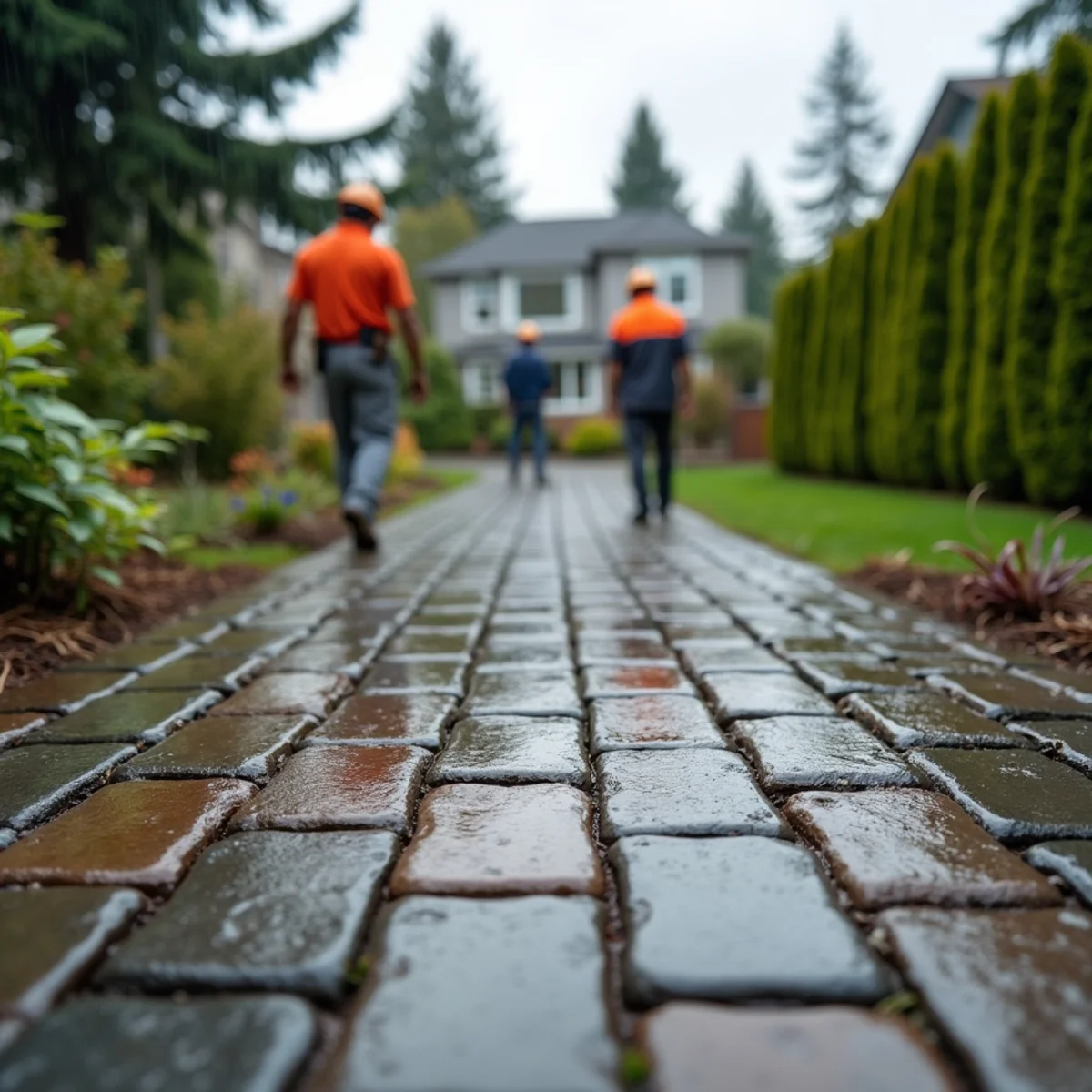
Permeable pavers let rain soak through instead of running off. Here is how they manage Seattle stormwater and where they fit into a wet-climate yard.
Seattle homeowners face a genuine tension when they want more hardscape. On one hand, you want a patio, a driveway, or a walkway. On the other, every square foot of impervious surface sends more rainwater running off your property, and our stormwater system is already working hard during a wet-season downpour. Permeable pavers are the elegant answer to that tension, letting you build the surface you want while the rain soaks straight through.
This guide explains how permeable pavers actually work, how they help with runoff and Seattle's stormwater goals, and what to consider before you install them. They are not the right answer for every site, but where the soil and grade cooperate, few upgrades do so much good for both your property and the waterways downstream of it.
How Permeable Pavers Work
Unlike a solid slab or standard pavers set on compacted fines, permeable pavers are laid with small gaps filled with open-graded aggregate. Below them sits a deep base of clean, void-rich stone that acts as a reservoir. Rain falls on the surface, passes through the joints, and is held in the stone base where it can slowly infiltrate into the ground rather than rushing off into the street.
- The surface pavers carry the load and provide the finished look.
- The jointing stone lets water pass through the gaps.
- The open-graded base stores water and lets it infiltrate.
- The result: far less runoff leaving your property.
The Stormwater Benefit
Managing rain where it falls is exactly what Seattle Public Utilities encourages through programs like RainWise, which promotes rain gardens, bioretention, and permeable paving to reduce the burden on the stormwater system. By infiltrating rain on site, permeable pavers reduce the volume and speed of runoff, which helps protect local waterways from the pollution and erosion that stormwater surges carry with them.
The best place for rain to go is straight into the ground where it lands.
Curious If Your Site Is a Good Fit?
Permeable systems work best where the underlying soil can accept water and the site is graded correctly. Call Florentino Landscaping at (323) 606-0255 and we will evaluate whether permeable pavers make sense for your Seattle lot.
Call (323) 606-0255The Lot Coverage Angle
Seattle regulates how much of a lot can be covered by impervious surfaces. Because permeable pavers manage stormwater on site rather than shedding it, they can factor differently into these calculations than solid paving, which sometimes gives homeowners more design flexibility. The rules are specific and situation-dependent, so this is always worth confirming with the city before you plan around it. Treat it as a potential bonus, not a guarantee.
Where Permeable Pavers Shine
They are not right for every site, but where conditions suit them, they solve several problems at once.
- 1Driveways, where they cut the runoff a large paved area would otherwise create.
- 2Patios on lots where drainage and coverage are concerns.
- 3Walkways through areas prone to puddling.
- 4Any project where you want to add hardscape without adding runoff.
What Makes Installation Succeed or Fail
Permeable systems live and die on the base and the soil beneath. The open-graded stone reservoir must be deep enough and the underlying soil must be able to accept water at a reasonable rate. On our dense hardpan soils, infiltration can be limited, so a good installer evaluates the soil first and may combine the permeable surface with additional drainage. Done right, the system quietly handles years of Seattle rain. Done wrong, it clogs and puddles like any other bad hardscape.
Maintaining a Permeable System
A permeable surface keeps working only if the joints stay open, so light maintenance is part of the deal. Over time, fine sediment and organic debris can collect in the gaps and slow the rate at which water infiltrates. Periodic cleaning, typically a specialized vacuuming of the joints, restores the flow, and keeping leaves and soil from washing across the surface reduces how often that is needed. Avoid piling landscape debris or storing soil on a permeable area, and refresh the jointing aggregate if it depletes over the years. With this modest upkeep, a well-built permeable installation manages Seattle's rain reliably for a very long time.
- Keep leaves and soil from washing across the surface into the joints.
- Have the joints cleaned periodically to restore infiltration.
- Never store soil or pile debris on a permeable area.
- Top up the jointing aggregate if it depletes over the years.
Build Smart for Seattle's Rain
Permeable pavers let you add the hardscape you want while working with Seattle's rain instead of against it. When the soil and grade suit them, they cut runoff, support the city's stormwater goals, and can even help with lot coverage. Florentino Landscaping LLC installs permeable and traditional pavers across Seattle and Mercer Island. Call (323) 606-0255 to see if they fit your project.
Frequently asked questions
They can if not maintained, but periodic cleaning of the joints keeps them draining. A properly built system with the right base handles years of Seattle rain reliably.
It depends on how well the underlying soil accepts water. On dense soils we evaluate infiltration first and may pair the pavers with additional drainage to make the system work.
Sometimes, because they manage stormwater on site rather than shedding it. The rules are specific, so always confirm with the city. Treat it as a potential bonus.
The deeper base and specialized aggregate can add cost, but the stormwater benefit is significant. Call (323) 606-0255 for an estimate on your project.