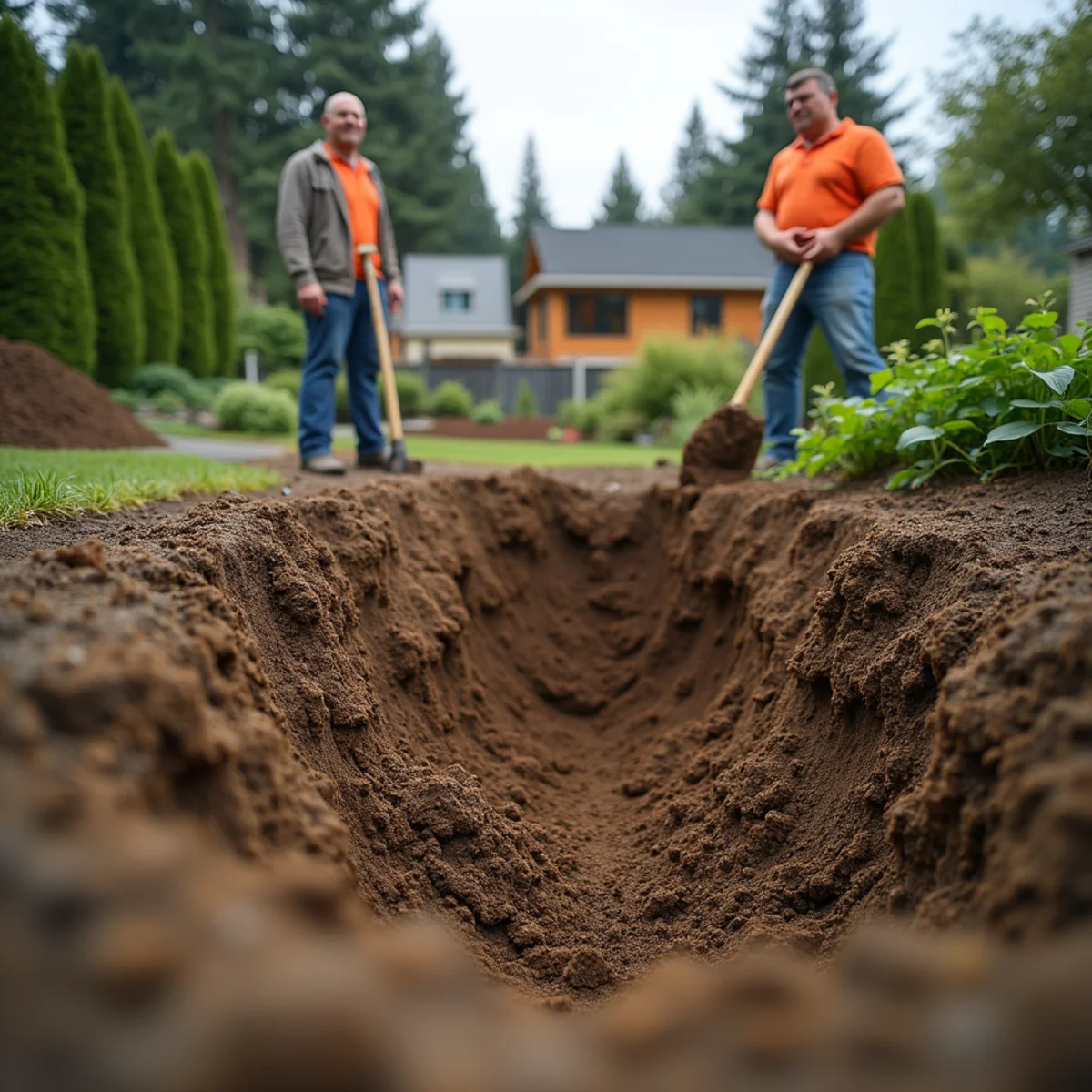
Seattle's glacial till and hardpan defeat plants and drainage alike. Here are the strategies that let landscaping thrive in our stubborn native soils.
Dig down almost anywhere in the Seattle area and you will eventually hit it: a dense, concrete-hard layer that your shovel bounces off of. That is glacial till, often called hardpan, and it is the single most underestimated factor in Puget Sound landscaping. The ice sheets that carved this region left behind soil that was compressed under thousands of feet of ice, and it behaves nothing like the loose topsoil most planting guides assume.
Understanding this layer, and working with it rather than against it, is the difference between a landscape that thrives and one that drowns, starves, or heaves. Homeowners who fight the till usually lose; the ones who plan around it end up with landscapes that look effortless precisely because so much thought went into the ground beneath them. Here is how the pros navigate it.
What Glacial Till Actually Does
Hardpan creates two problems that seem contradictory but often occur together. Because water cannot pass through it easily, the soil above stays waterlogged in winter, drowning roots and breeding moss. Yet the dense layer also blocks roots from reaching deeper moisture, so the same site can stress plants in the dry summer. It is a layer that holds too much water at the wrong time and too little at another.
Hardpan is a lid on the soil. Everything you plant lives in the shallow layer above it.
Drainage Comes First, Always
On till soils, you cannot plant your way out of a drainage problem. Because the hardpan traps water, any low area or house-ward grade becomes a bathtub in the wet season. The first move on a till lot is almost always to establish where water goes.
- French drains to intercept and route the water perched on top of the hardpan.
- Raised beds and mounding to lift root zones above the saturated layer.
- Swales to carry surface water toward a legal outlet.
- Regrading to move water away from structures and low pockets.
Planting Strategies That Work
Once water is managed, planting on till requires a different mindset than the deep, fluffy beds in the gardening books. The strategy is to give plants a workable root zone and to choose species that tolerate our conditions.
- 1Amend generously with compost to build a deeper, more workable topsoil layer.
- 2Break up or penetrate the hardpan where feasible so roots and water can move.
- 3Build up with raised beds and berms rather than only digging down.
- 4Choose plants suited to our wet winters and dry summers, especially natives.
- 5Avoid creating planting holes that act as sumps in the surrounding hardpan.
The Sump Hole Trap
Digging a nice planting hole in hardpan and backfilling with loose soil creates a bucket that fills with water and drowns the plant. On till lots, drainage and planting must be designed together. Call Florentino Landscaping at (323) 606-0255 for a plan that accounts for your soil.
Call (323) 606-0255Why Native Plants Are Your Allies
Pacific Northwest native plants evolved in exactly these conditions: wet winters, dry summers, and imperfect soils. Species adapted to our climate handle the seasonal swing far better than fussy imports, need less water once established, and support local wildlife. On a challenging till lot, leaning into natives is not just an aesthetic choice, it is a practical one that reduces failures and maintenance.
Building Better Soil Over Time
Improving soil on top of hardpan is a gradual project, not a one-time dump of compost. Incorporating organic matter over successive seasons steadily deepens the workable layer and improves both drainage and moisture retention, which is exactly what a till lot lacks. Mulching your beds heavily each year feeds that same process as the material breaks down into the soil below. Where you need real root depth for larger plants, raised beds and berms remain the most reliable route, since you are adding good soil above the till rather than fighting the dense layer beneath. Patience pays here: a till lot improved thoughtfully over a few years grows far more than one where everything was forced in at once.
- 1Add compost and organic matter over several seasons to deepen the topsoil.
- 2Mulch beds heavily each year to feed the soil as it breaks down.
- 3Use raised beds and berms where larger plants need root depth.
- 4Avoid forcing plantings into a lot before its drainage is solved.
Design With the Soil, Not Against It
The homeowners who succeed on glacial till are the ones who accept the soil for what it is and design around it. That means solving drainage first, building up root zones, choosing adapted plants, and never treating a planting hole as if it were open topsoil. Get those right and even a stubborn till lot becomes a thriving landscape. Florentino Landscaping LLC designs and installs landscapes suited to our soils across King County and Sammamish. Call (323) 606-0255 to start.
Frequently asked questions
It is a dense, compressed soil layer left by the ice sheets that carved this region. It resists water and root penetration, causing both winter waterlogging and summer drought stress.
Often because a planting hole dug into hardpan acts like a bucket that fills with water and drowns the roots. On till lots, drainage and planting must be solved together.
Yes. PNW natives evolved with our wet winters, dry summers, and imperfect soils, so they handle the seasonal swing with less water and fewer failures once established.
You can break it up or penetrate it in places and build up above it, but the reliable approach is designing drainage and raised root zones around it. Call (323) 606-0255 for a plan.