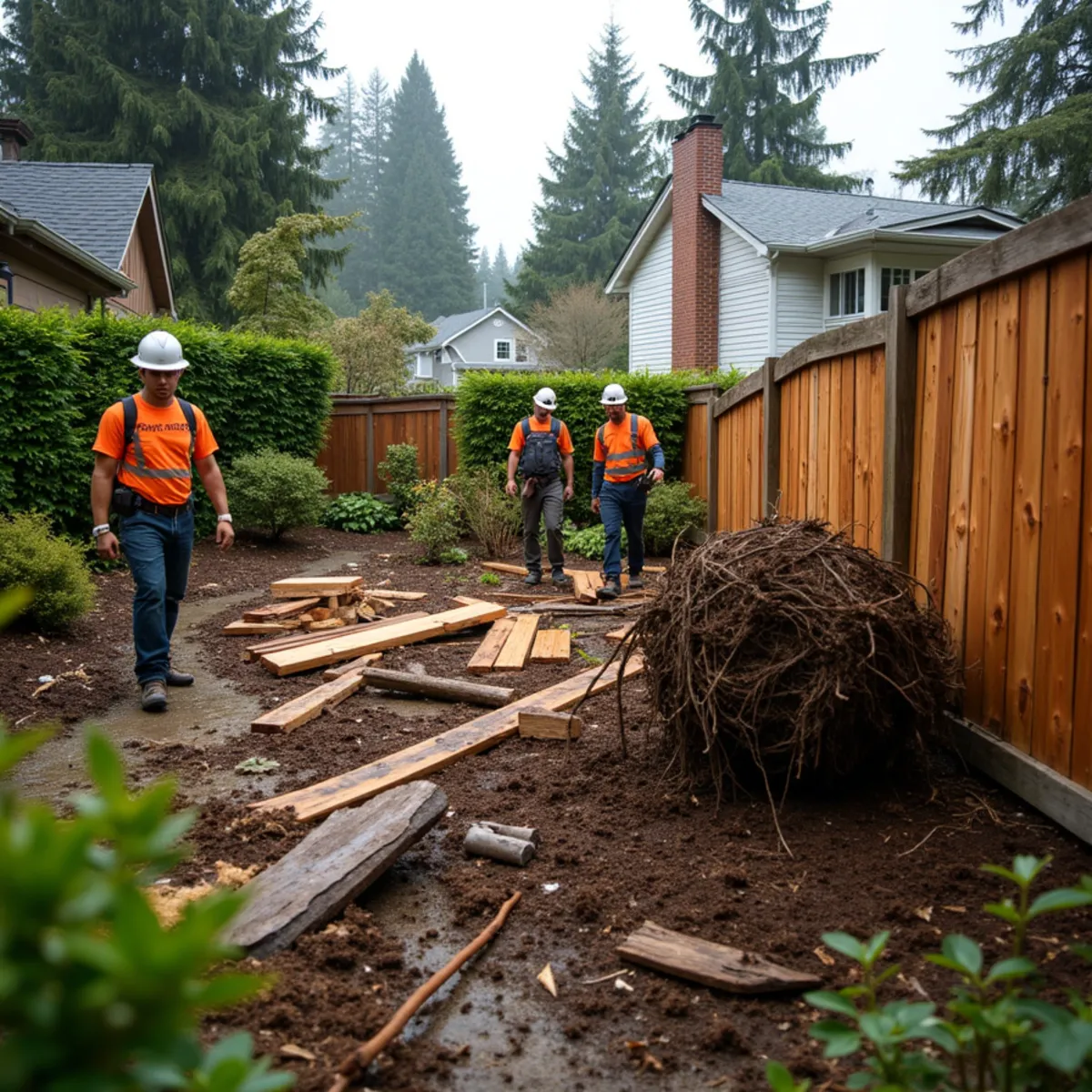
Puget Sound windstorms leave a predictable trail of damage. Here is how to triage downed fences, slope failures, and heaved roots safely after the wind dies down.
When a strong marine windstorm barrels across the Puget Sound, it tends to leave the same signature of damage across yard after yard: fence panels flattened, slopes sloughing off, and trees leaning at new and alarming angles. The wind arrives from the south and southwest with the most force, and exposed properties in Burien, Edmonds, and along the bluffs take the brunt of it.
Once the wind finally settles, the temptation is to rush outside and start cleaning up. Resist that urge for a moment. Windstorm sites hide hazards that are not obvious until you are standing among them, and a careful triage keeps you safe while you sort what needs an emergency response from what can wait.
Triage Before You Touch Anything
Walk the perimeter of your property first and look, but do not handle. You are checking for the three things most likely to cause injury after a storm.
- Downed or sagging power and utility lines, which you must assume are live.
- Leaning trees and hanging limbs, the widow-makers that drop hours after the wind stops.
- Slope movement, cracks in the soil, or a hillside that looks freshly slumped.
Downed and Damaged Fences
Cedar fencing takes a beating in high wind, especially older runs where the posts have started to rot at the soil line. A fence that has partially failed can become a sail in the next gust or a hazard for pets and children. Secure any loose panels, but hold off on permanent repairs until the weather window is stable.
When we rebuild storm-damaged fencing, we treat it as a chance to correct the failure point. That usually means setting new posts properly, addressing drainage at the base, and choosing rot-resistant details so the next windstorm does not repeat the same damage.
Slope Failure Is an Emergency
If you see fresh cracks in a hillside, tilting trees, or soil that has slumped toward your home, keep everyone away from the area and call us immediately at (323) 606-0255. Mudslides can continue moving long after the rain stops.
Call (323) 606-0255Mudslides and Saturated Slopes
The Puget Sound's steep, saturated hillsides are prone to failure when heavy rain and wind arrive together. Coastal bluff properties in Burien and view lots in Edmonds sit on exactly the kind of glacial soils that let go under load. A small slump today can become a major slide next week if the underlying drainage is not addressed.
A slope that has already moved once will move again unless you fix the water behind it.
Understanding Root Heave
Root heave happens when the wind rocks a tree hard enough to lift and crack the root plate, pushing up the surrounding soil, walkways, and lawn. Even if the tree stays standing, a heaved root plate is a serious warning sign. The anchoring roots may be torn, and the tree can come down entirely in the next storm.
- 1Keep clear of any tree with visibly lifted soil around its base.
- 2Do not attempt to push, pull, or brace a leaning tree yourself.
- 3Have the tree assessed before deciding whether it can be saved or must be removed.
- 4Address the void and grade left behind so water does not pool at the failure point.
Putting the Property Back Together
A full windstorm recovery usually touches several trades at once: hazard tree work, fence rebuilding, slope stabilization, and drainage correction. Handling them as one coordinated project is faster and cheaper than piecemeal fixes, and it lets us solve the underlying cause rather than just the visible mess.
Preparing for the Next Windstorm
Recovery is also the ideal moment to reduce your exposure before the next system rolls in off the Sound. Windstorms tend to follow the same corridors year after year, which means the fence that blew down and the slope that slumped are likely to be tested again. Rebuilding with proper post drainage, thinning weak and overextended limbs on exposed trees, and correcting the drainage behind a failed slope all lower the odds of a repeat. Coastal and bluff-facing properties in areas like Burien and Edmonds benefit most from this forward-looking approach, because they take the full force of a southwesterly gale.
- Rebuild fencing with drained, rot-resistant posts set to resist wind load.
- Thin weak or overhanging limbs on trees exposed to the prevailing wind.
- Fix the drainage behind any slope that slumped so it does not saturate again.
- Address heaved root plates and regrade the voids they leave behind.
Get Your Property Storm-Ready Again
Windstorm damage is disorienting, but a methodical recovery gets your property safe and stable. Triage carefully, stay away from lines and slopes, and let a professional crew handle the hazards. Florentino Landscaping LLC provides storm damage cleanup and fence repair across Burien, Edmonds, and the wider Puget Sound. Call us at (323) 606-0255 to get the cleanup and repairs underway.
Frequently asked questions
Secure loose panels right away for safety, but wait for a stable weather window for permanent repairs. We often use the rebuild to correct the post rot or drainage issue that caused the failure.
Not always, but it is a serious warning. Torn anchoring roots make a tree far more likely to fall in the next storm, so it should be assessed before you decide.
Steep glacial soils saturated by heavy rain, often combined with poor slope drainage and wind loading. Correcting the water behind the slope is key to preventing repeat failures.
Yes. Coordinating hazard tree removal, fence repair, and drainage as one project is faster and addresses the root cause. Call (323) 606-0255 to schedule.