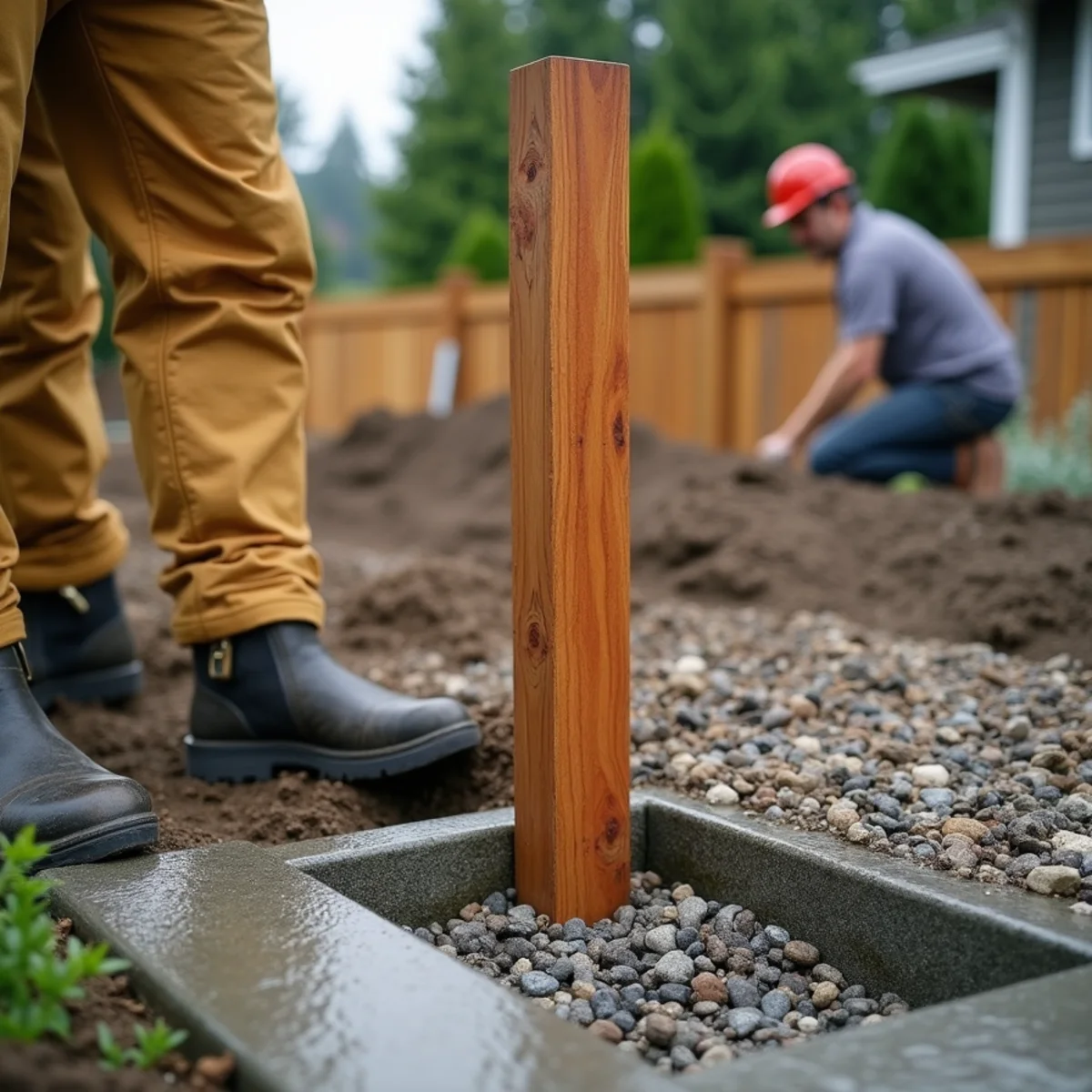
Cedar fences fail at the posts, not the pickets. Here is how to stop post rot in the PNW's wet soils and get decades out of your fence.
Western red cedar is the classic Pacific Northwest fence material for good reason. It is naturally beautiful, dimensionally stable, and more rot-resistant than most woods. But even cedar has a weak point in our climate, and it is almost always the same one: the posts, right where they meet the soil. A fence can have perfect pickets and rails and still fail because the posts rotted off at the ground line.
If you understand why posts rot and how to prevent it, you can get decades out of a cedar fence in even the wettest yard. The pickets and rails get most of the attention because they are what you see, but the part that determines the fence's lifespan is the few inches of post buried where you cannot. Here is what actually matters.
Why Posts Are the First to Go
Rot needs moisture, oxygen, and time, and the soil line delivers all three. A post buried in our saturated, slow-draining soils stays damp for months, and the zone right at the surface, wet but still exposed to air, is the perfect environment for decay fungi. The pickets up in the air dry out between rains; the post base rarely gets that chance.
A fence is only as good as what you cannot see. The failure always starts underground.
The Concrete Collar Mistake
Here is a counterintuitive truth: pouring concrete straight around a wood post often makes rot worse, not better. If the concrete forms a bowl that traps water around the base of the post, it holds moisture against the wood exactly where you least want it. Many failed PNW fences have posts that rotted off right at the top of a concrete collar that was quietly holding water.
How to Set Posts That Last
The goal with every technique below is the same: keep water moving away from the post base rather than pooling against it. Drainage is the whole game.
- Use posts rated for ground contact, or a rot-resistant post material at the base.
- Set posts on a bed of compacted gravel so water drains down and away.
- If using concrete, crown it so it sheds water away from the post rather than cupping it.
- Keep soil, mulch, and debris from piling up against the post base.
- Ensure the surrounding grade slopes away from the fence line.
Repair or Replace? Let Us Look
If a few posts have failed but the fence is otherwise sound, targeted post replacement may save you a full rebuild. Call Florentino Landscaping at (323) 606-0255 and we will assess whether repair or replacement is the smarter call.
Call (323) 606-0255Material Choices That Extend Life
Some homeowners choose to combine the beauty of cedar with a more durable post base, using pressure-treated or steel post supports below grade while keeping cedar visible above. It is a practical hybrid that puts the rot-resistant material exactly where the moisture problem lives, and it can dramatically extend the useful life of the fence.
Maintenance That Buys You Years
Even a well-set cedar fence benefits from a little upkeep. Keeping the wood sealed or stained slows moisture absorption, and a yearly walk of the fence line catches small problems before they spread.
- 1Reseal or restain every few years to keep water out of the grain.
- 2Clear vegetation and soil away from the base each season.
- 3Check for soft spots at the ground line before they become failures.
- 4Repair or replace individual posts early rather than waiting for a collapse.
Gates: The Hardest-Working Part
Gates deserve special attention because they take more abuse than any other part of a fence, swinging and slamming through years of wet Pacific Northwest weather. A gate that sags, drags, or sticks is usually the first thing to fail on an otherwise sound fence. The fix starts with a properly set, well-drained gate post heavy enough to carry the swinging load, paired with quality hinges and hardware rated for outdoor use. Bracing the frame against sag and leaving enough clearance so swelling wood does not bind keeps the gate working freely season after season. Get the gate right and a well-built cedar fence will give you very little trouble for decades.
- Set gate posts heavier and better drained than line posts.
- Use corrosion-resistant hinges and hardware rated for the outdoors.
- Brace the frame diagonally to prevent sag over time.
- Leave clearance so wet-season swelling does not cause binding.
Build a Fence That Outlasts the Weather
In the wet Pacific Northwest, a cedar fence lives or dies at the posts. Set them for drainage, avoid the water-trapping concrete collar, and keep the base clear, and your fence will stand strong for decades. Florentino Landscaping LLC installs and repairs cedar fencing across Federal Way and Covington with post details built for our soils. Call (323) 606-0255 for an estimate.
Frequently asked questions
If the concrete cups and traps water around the base, it holds moisture against the wood. Crowning the concrete to shed water, or setting posts on gravel, prevents this.
Often yes. If the pickets and rails are still sound, targeted post replacement can save a full rebuild. We assess this on site.
Cedar's natural rot resistance and stability make it an excellent PNW choice, especially when paired with properly drained posts. It ages beautifully and lasts.
Every few years is a good rule, though it depends on exposure. Resealing slows moisture absorption and extends the life of the wood. Call (323) 606-0255 with questions.