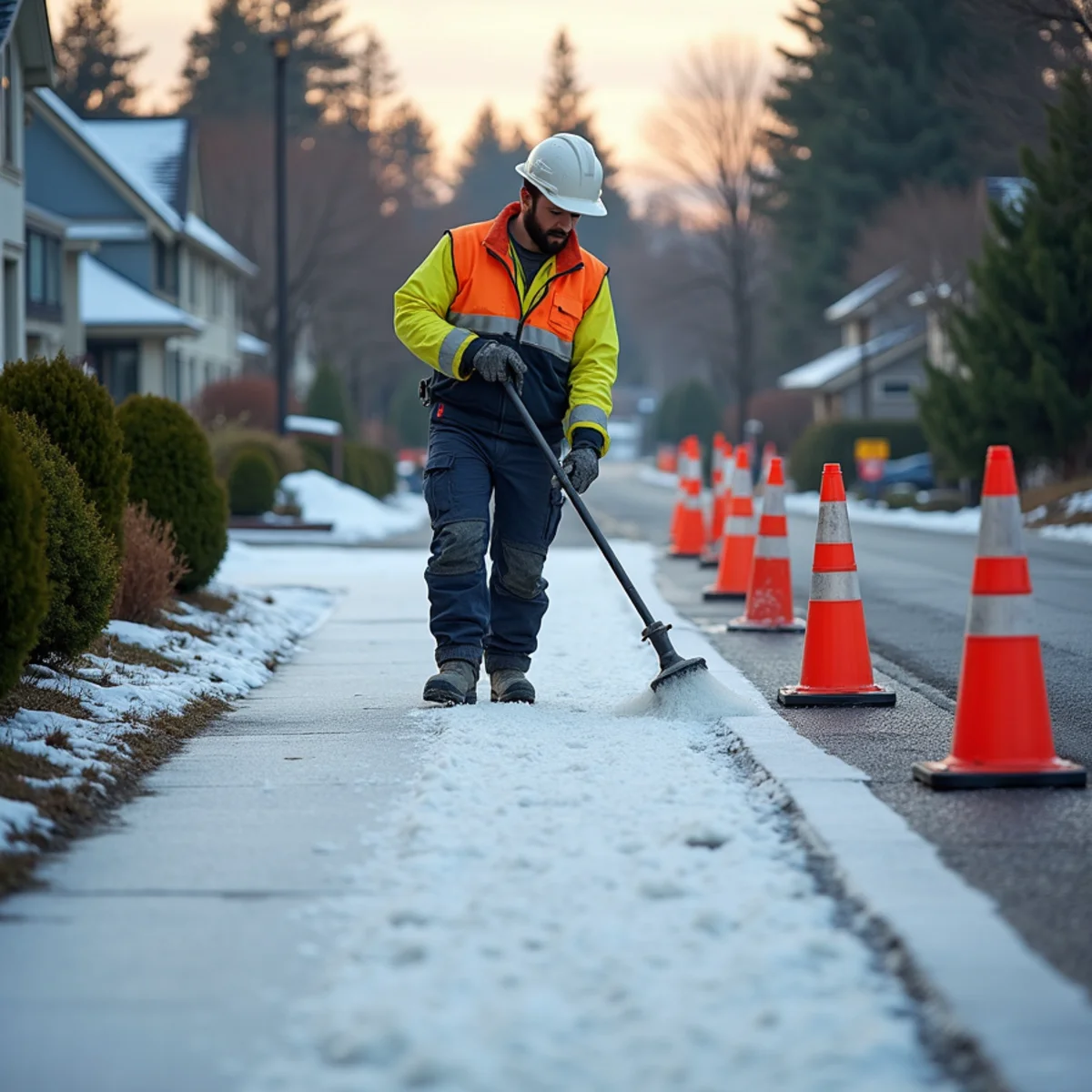
For commercial business parks, an icy walkway is a lawsuit waiting to happen. Here is what a zero-tolerance deicing protocol looks like in the Puget Sound.
For a Puget Sound commercial business park, winter ice is not just an inconvenience, it is a liability exposure. A single slip-and-fall on an untreated walkway can trigger a claim that dwarfs a whole season's worth of deicing costs, and our infrequent freezes make properties especially vulnerable because they are so rarely prepared. A zero-tolerance deicing protocol is how professional property managers protect both the people on their property and the business behind it.
This guide lays out what a serious commercial deicing protocol includes and why proactive, documented ice management is the standard every business park should hold.
Why Zero-Tolerance?
In a commercial setting, there is no acceptable amount of ice on a pedestrian surface. Employees, clients, and delivery drivers all traverse the property, and every icy step is a potential injury and claim. Zero-tolerance simply means the protocol is designed to prevent ice from forming and to eliminate it quickly wherever it does, rather than tolerating hazards until someone complains or falls.
The cheapest deicing you will ever buy costs far less than the fall you did not prevent.
Proactive Beats Reactive Every Time
The foundation of a strong protocol is anti-icing: treating surfaces before a freeze so ice cannot bond to the pavement. This is dramatically more effective than waiting for ice to form and then trying to break it up. Proactive treatment means monitoring the forecast, applying deicer ahead of the event, and being staged to respond the moment conditions change.
- Forecast monitoring so the property is treated before the freeze arrives.
- Pre-application of deicer to prevent ice from bonding to surfaces.
- Staged materials and equipment ready before the event, not after.
- Rapid response to refreeze, especially during freeze-thaw swings.
Prioritizing Pedestrian Zones
Slip-and-fall claims originate where people walk, so a good protocol prioritizes pedestrian areas above all. These are the highest-liability zones and get treated first and most thoroughly.
- 1Building entrances, exits, and the transition from lot to door.
- 2ADA-accessible routes, ramps, and designated parking.
- 3Sidewalks, crosswalks, and covered walkways between buildings.
- 4Stairs and any change in elevation, which are the most dangerous of all.
Documentation Is Your Legal Shield
If a claim ever arises, records of every treatment and inspection are your strongest defense. A protocol that logs each service pass protects you. To set up documented winter coverage for your business park, call Florentino Landscaping at (323) 606-0255.
Call (323) 606-0255Documentation That Protects You
Beyond keeping people safe, thorough records protect the property owner if a claim is ever filed. A professional protocol documents when the property was treated, what was applied, and the conditions at the time. This log is often the deciding factor in defending against a slip-and-fall claim, demonstrating that the property was maintained responsibly rather than neglected.
Choosing the Right Materials and Partner
Effective deicing also means using appropriate materials for the conditions and applying them correctly, balancing safety against damage to pavement and landscaping. Just as important is the partner behind the protocol. For a business park, you want a contractor with the equipment, staffing, and reliability to service a large property on short notice, carrying proper Washington L&I registration and the required liability coverage. Pairing deicing with year-round grounds maintenance gives you one accountable team that already knows the site.
The Real Cost of a Single Claim
To understand why proactive deicing is worth every dollar, weigh it against what a single slip-and-fall can cost. A serious fall on an untreated surface can lead to medical bills, lost work, and a liability claim that runs well into six figures once legal costs and a settlement are counted, far beyond a full season of professional deicing. Beyond the dollars, there is the reputational hit to a property that earns a name for being unsafe, and the strain on tenant relationships when their employees and customers get hurt on your grounds. Viewed that way, a documented deicing protocol is not really an expense at all; it is an insurance policy that also keeps your property open and operating through every freeze.
- A single serious claim can dwarf an entire season of deicing costs.
- Unsafe grounds damage a property's reputation with tenants and visitors.
- Injuries strain tenant relationships and can affect lease renewals.
- Documented, proactive service keeps the property open and defensible.
Put a Protocol in Place Before Winter
A zero-tolerance deicing protocol protects your people and shields your business from liability. Treat proactively, prioritize pedestrian zones, document everything, and work with a capable partner. The time to arrange it is now, not during the first freeze. Florentino Landscaping LLC provides commercial deicing and grounds maintenance across Tukwila, Kent, and the Puget Sound. Call (323) 606-0255 to set up your winter protocol.
Frequently asked questions
It means the protocol is designed to prevent ice from forming and remove it quickly wherever it does, rather than tolerating hazards on pedestrian surfaces until someone complains or falls.
Records of every treatment and inspection are often the deciding factor in defending a slip-and-fall claim, showing the property was maintained responsibly rather than neglected.
Pedestrian zones, because that is where slip-and-fall claims originate: entrances, ADA routes, sidewalks, and especially stairs and elevation changes.
Before winter, not during the first freeze. Properties with a plan on file are ready when conditions hit. Call (323) 606-0255 to arrange coverage.